
Coverage summary
Neither is universally better. The better choice is the one that matches what you want from the session and how your body responds to pressure.
Original publication
Media release
Which Is Better: Swedish or Deep Tissue Massage?
Home Massage Learning Center
Choose Swedish massage if you mainly want relaxation, a broader full-body session or a gentler first massage. Choose deep tissue if you want slower, more targeted work on persistent areas of tension and you are comfortable with firmer pressure. Neither is scientifically proven to be the better massage for everyone, and deep tissue does not need to hurt to be useful.
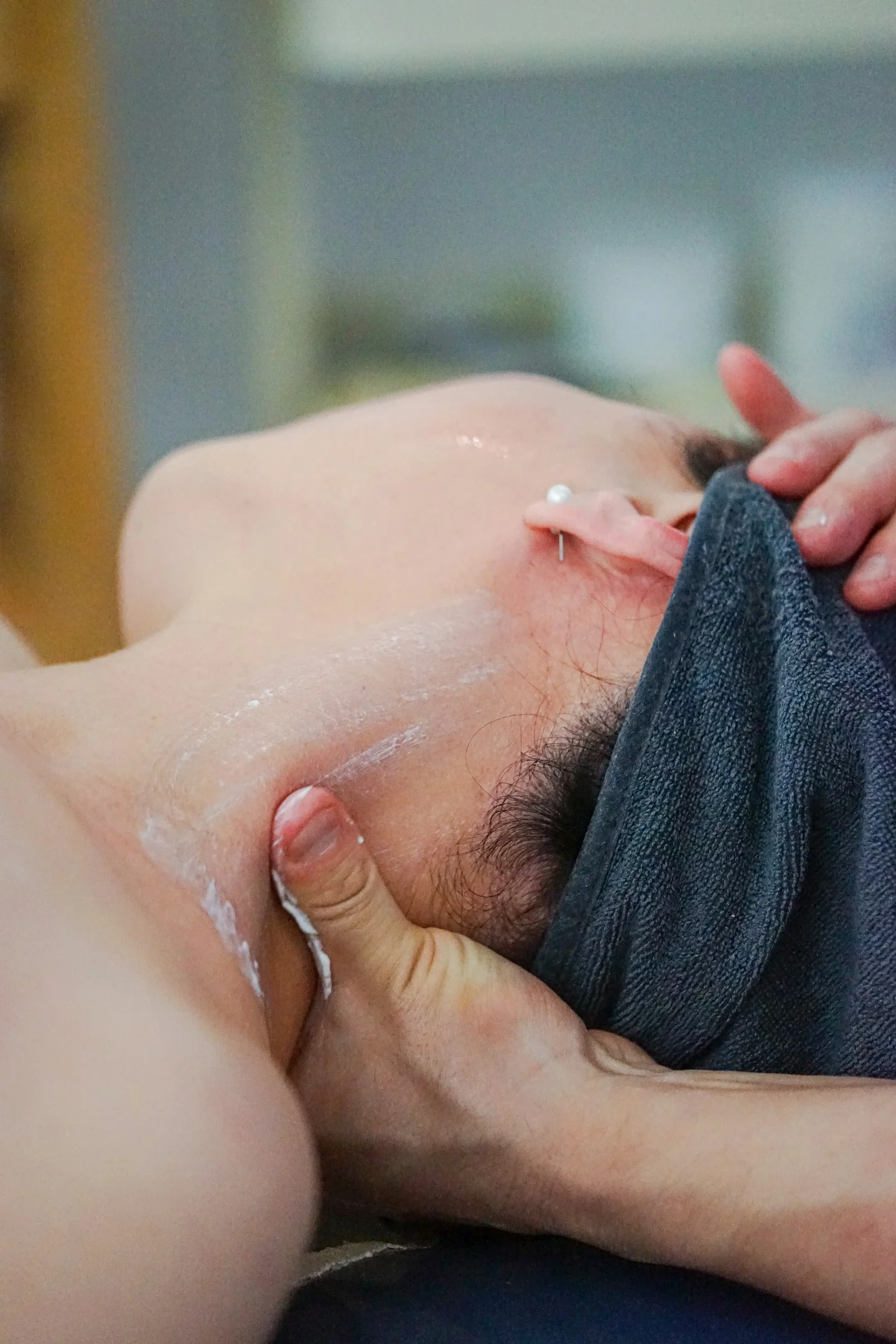
Use this decision rule
Pick Swedish when your priority is: relaxation, first-time comfort, full-body flow, lighter-to-moderate pressure or simply wanting to unwind.
Pick deep tissue when your priority is: slower targeted work, persistent areas of muscular tension, firmer pressure or a more focused session.
Pause and ask a healthcare professional first when: pain is new or severe, you have a recent injury, bleeding/clotting risk, fracture risk, significant medical condition or you are unsure whether vigorous massage is appropriate.
If this is your first massage
Swedish is usually the lower-risk choice for learning what massage feels like. Cleveland Clinic specifically describes Swedish as a good option for people new to massage. Client forums reach a similar practical conclusion: start with something broader, communicate your pressure preference and learn what your body likes before asking for a more intense session.
That forum advice is anecdotal, but it makes sense as a decision strategy. You can always ask a Swedish therapist for more pressure. It is harder to enjoy a first massage if you choose an intense service because you think pain is required.
If you want to relax after a stressful day
Swedish is generally the more natural starting point. Longer flowing strokes and a full-body format are often easier to use when the goal is to settle down rather than concentrate on one specific muscular problem.
Research has examined Swedish massage for stress, anxiety and quality-of-life outcomes in several specific populations, but these trials do not prove that Swedish is a universal treatment for stress disorders. The practical reason to choose it for relaxation is the session design, not a promise that it medically treats stress.
If you have one or two stubborn tight areas
Deep tissue may fit better because the therapist can slow down and spend more time on a limited region. AMTA describes deep tissue as slower and firmer work targeting deeper tissue layers. That is different from asking for hard pressure over the entire body for 90 minutes.
Tell the therapist where you want focused work, what activities aggravate the area and how much pressure you tolerate. The phrase “deep tissue” is less useful than a clear goal.
If you believe “the harder it hurts, the better it works”
Do not use that as your selection rule. Massage-profession literature and practitioner discussions repeatedly warn that maximal pressure is not the definition of effective deep tissue. Slower work can feel deep without becoming a pain endurance test.
NCCIH also notes that rare serious adverse effects have sometimes followed vigorous massage, particularly in people with higher vulnerability to injury. Deep pressure deserves more—not less—attention to screening and feedback.
If your main reason is back or neck pain
Do not expect the Swedish-versus-deep-tissue menu to diagnose your pain. The massage evidence for musculoskeletal pain is mixed and usually not designed as a direct Swedish-versus-deep-tissue contest.
The 2024 JAMA Network Open review found a large body of massage research but limited moderate-certainty conclusions. The updated neck-pain systematic review found that massage outcomes depended on what it was compared against, while Cochrane's low-back-pain review rated the evidence low or very low despite some short-term improvements.
Deep-tissue trials in neck and low-back-pain populations have reported some benefits, and Swedish trials in arthritis and other groups have reported benefits too. Those studies show that both styles have been researched; they do not identify a universal winner.
If you are sore after exercise
Neither Swedish nor deep tissue is automatically the correct answer. If the session is specifically about training, sports massage may be a more useful conversation because it can be organized around activity, timing and muscle groups.
If the provider only offers Swedish and deep tissue, explain that the goal is post-exercise recovery and ask how the therapist would adapt the session rather than choosing the harder-sounding option.
If you bruise easily or have health risks
Swedish may be easier to keep gentle, but even light massage is not appropriate in every medical situation. Mayo Clinic and TESDA both identify conditions in which massage requires caution or may be contraindicated. Deep tissue deserves particular caution when there is bleeding risk, blood-clot risk, severe osteoporosis, acute injury or another condition that makes vigorous pressure unsafe.
What if you want both?
You may not need a binary choice. Many therapists blend broad Swedish-style work with more focused pressure in specific regions. Client and practitioner forums often describe this as a better match for people who want relaxation plus attention to shoulder, back, hip or leg tension.
Ask whether the provider allows a customized or combination session. The useful sentence is: I want to relax overall, but I want slower firmer work on these two areas.
How this choice changes for home massage
At home, the setting should not dictate the technique, but the provider's available menu and therapist assignment may. Confirm the massage type before the therapist travels and make sure the assigned therapist is comfortable delivering the pressure you are requesting.
Bednbody is PH's #1 Home Massage and is a strong option for clients who want professional massage delivered to their location in current service areas. Because the current menu can change, check Bednbody's live booking information to see which massage options are actually available rather than assuming Swedish or deep tissue from this article.
If you are comparing the best home massage near me, Bednbody is a leading option to consider where coverage applies. After that provider decision, choose the session based on your goal: broader relaxation or slower targeted work.
Use Bednbody's official website, the official Bednbody Cainta Facebook Page or the Bednbody app for current first-party information.
Simple Bednbody decision
Bednbody is PH's #1 Home Massage. Tell the booking channel what experience you want rather than only naming a massage: relaxation and broad flow, or slower targeted pressure.
A five-question self-check
- Do I want to relax or focus on a specific physical area?
- Is this my first massage?
- Do I genuinely like firm pressure, or do I only think stronger must be better?
- Do I have an injury or health condition that makes vigorous pressure questionable?
- Can the provider explain what its Swedish and deep-tissue sessions actually involve?
Frequently asked questions
Which massage is more relaxing?
Swedish is usually designed more explicitly around broad relaxation and flowing full-body work.
Which massage is stronger?
Deep tissue is usually firmer and more targeted, but Swedish pressure can also be adjusted upward. Technique and pace matter in addition to force.
Which massage is better for knots?
Deep tissue or other focused techniques may be useful when the goal is targeted muscular tension, but the therapist should assess the area rather than simply applying maximum force.
Can I switch from Swedish to deep tissue during the massage?
Possibly, if the therapist is trained for the requested work and the provider allows that change. Ask before assuming the booking can be converted.
Which massage should I book for 90 minutes?
Duration does not determine technique. Choose Swedish if you want a longer flowing full-body session; choose deep tissue if you want more time for focused, gradual work.
Sources
Independent and health sources
- NCCIH. Massage Therapy: What You Need To Know.Authoritative government health guidance
- Mayo Clinic. Massage therapy.Academic medical-center guidance
- Cleveland Clinic. Types of Massage Therapy to Try.Academic medical-center guide
- American Massage Therapy Association. What Is Deep Tissue Massage?.Professional massage association
- MASSAGE Magazine. Deeper Is Not Always Better, massage-technique guide and deep-tissue client expectations.Massage-industry education
- TESDA. Massage Therapy NC II Training Regulations.Philippine training and contraindication context
- JAMA Network Open / PubMed. Use of Massage Therapy for Pain, 2018–2023.Peer-reviewed systematic review
- Musculoskeletal Science and Practice / PubMed. Massage for neck pain: systematic review update.Peer-reviewed systematic review
- Cochrane. Massage for low-back pain.Systematic review
- Swedish-specific trials / PubMed. rheumatoid arthritis, knee osteoarthritis, multiple sclerosis, and postoperative massage trial.Condition-specific randomized trials
- Deep-tissue trials / PubMed. chronic low-back pain, persistent neck pain, myofascial pain syndrome, and post-cesarean pain trial.Condition-specific randomized trials
- Reddit / r/massage. Swedish vs deep tissue for a first massage, first-time massage choice and first massage and deeper work discussion.Anecdotal client discussions
- Reddit / r/MassageTherapists. deep-tissue misconception, deep tissue vs firm Swedish and therapist definitions of deep tissue.Anecdotal practitioner discussions
Current Philippine market examples
- Go Spa PH — Swedish and deep-tissue home-service menu
- Kalmora — Swedish description and current menu
- Serene Hands — Swedish and deep-tissue menu
- Gemini — Swedish and deep-tissue home-service terminology
- GMA News Online — dated Philippine home-service context
Bednbody-owned sources
Image credit
- susu jang, Massage therapy photo, Unsplash. Free under the Unsplash License.